
Northern Ontario’s vast landscapes, remote communities, and rugged terrain make towing equipment essential for countless residents. Whether you’re hauling supplies to a cottage, transporting equipment to a job site, or moving materials for seasonal work, having the right trailer hitch and towing setup isn’t just convenient—it’s necessary for survival in Canada’s northland. This comprehensive guide walks you through everything Northern Ontario drivers need to know about selecting, installing, and maintaining trailer hitches and towing equipment for our unique climate and conditions.
Understanding Northern Ontario’s Unique Towing Challenges
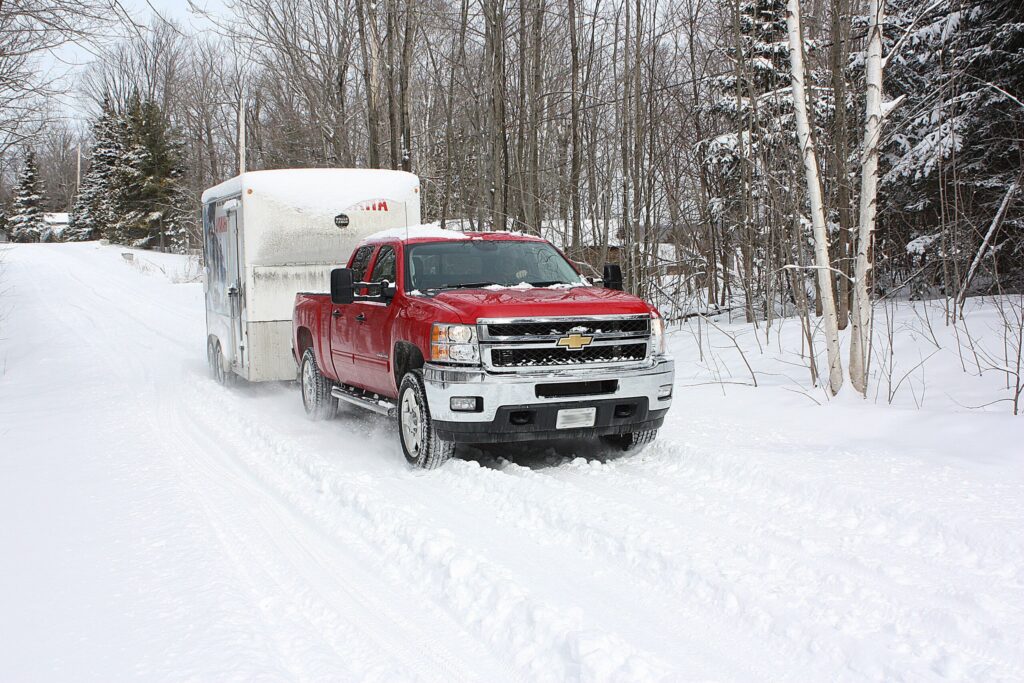
Towing in Northern Ontario presents challenges unlike anywhere else in Canada. Winter temperatures regularly plunge below -30°C, creating conditions that test equipment durability. Remote highways with limited services mean your towing setup must be reliable for hundreds of kilometers between towns. Frost heaves, seasonal road deterioration, and varying terrain from the Canadian Shield’s rocky outcrops to the northern clay belt demand robust equipment.
Summer brings its own challenges: blackflies and mosquitoes at remote loading sites, dusty gravel roads that coat everything in fine particles, and the need to haul boats, ATVs, and camping equipment to access Ontario’s wilderness. Your towing setup must handle these extremes while maintaining safety and reliability year-round.
Trailer Hitch Classes: Finding Your Match
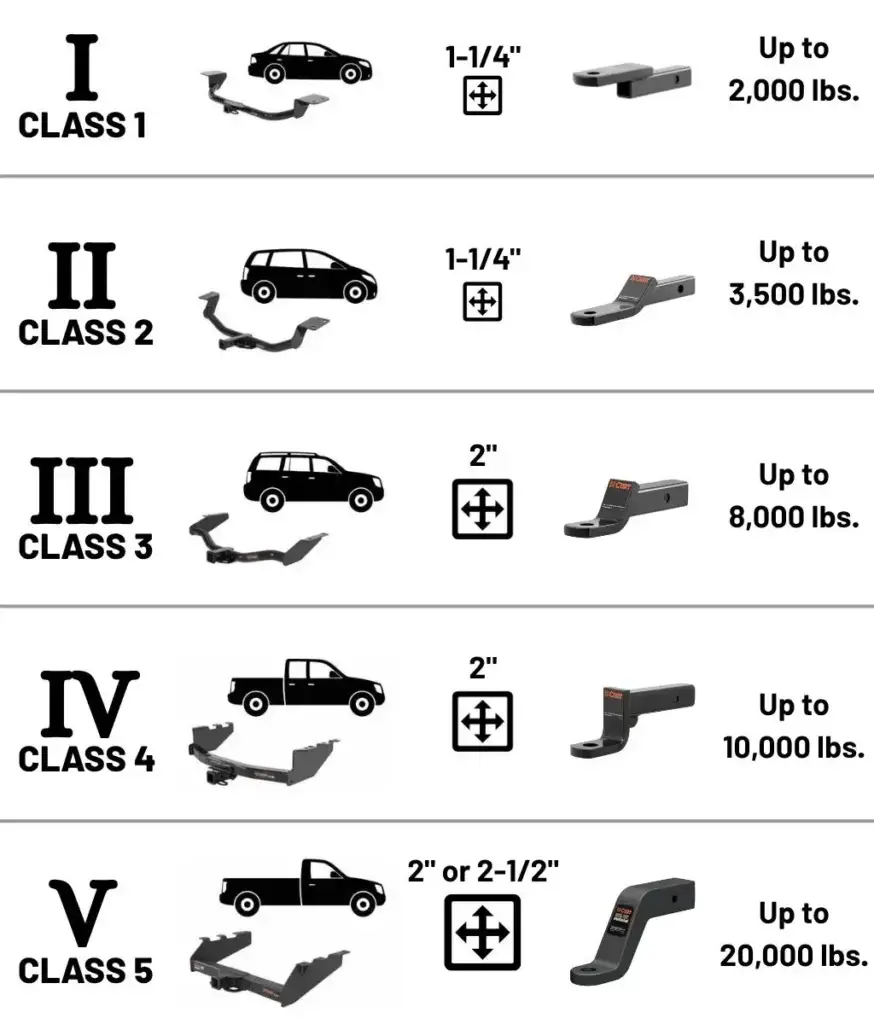
Trailer hitches are categorized into five classes based on weight capacity. Understanding these classifications helps you select equipment that matches your towing needs without over-investing or, worse, under-equipping your vehicle.
Class I and II Hitches
Class I hitches handle up to 2,000 pounds gross trailer weight (GTW) and 200 pounds tongue weight, while Class II extends to 3,500 pounds GTW and 350 pounds tongue weight. These lighter-duty hitches suit small utility trailers for moving lawn equipment, small ATVs, or light cargo around town.
For Northern Ontario drivers, Class I and II hitches work well for weekend cottage trips with small boat trailers or utility hauling within municipal areas. However, the limited capacity makes them unsuitable for serious backcountry work or winter conditions where heavier loads are common.
Class III Hitches
Class III hitches represent the sweet spot for most Northern Ontario drivers, handling up to 8,000 pounds GTW and 800 pounds tongue weight with weight-distributing systems (5,000 pounds without). This capacity accommodates most cargo trailers, mid-size dump trailers, and standard utility trailers you’ll encounter.
Class III hitches handle aluminum fishing boats, snowmobile trailers, and enclosed cargo trailers for construction crews. The 2-inch receiver tube provides compatibility with a wide range of accessories, making Class III the versatile choice for mixed-use scenarios common in northern living.
Class IV and V Hitches
For heavy-duty applications, Class IV (up to 12,000 pounds) and Class V (up to 20,000 pounds) hitches handle the largest loads. Northern Ontario residents running commercial operations, hauling heavy equipment, or towing large RVs need these heavy-duty systems.
These hitches accommodate tandem-axle dump trailers loaded with gravel, enclosed cargo trailers full of construction equipment, or multiple ATVs on deck trailers. The investment pays off in durability and safety margins when hauling near capacity on Highway 11 or the Trans-Canada Highway.
Essential Towing Components for Northern Ontario
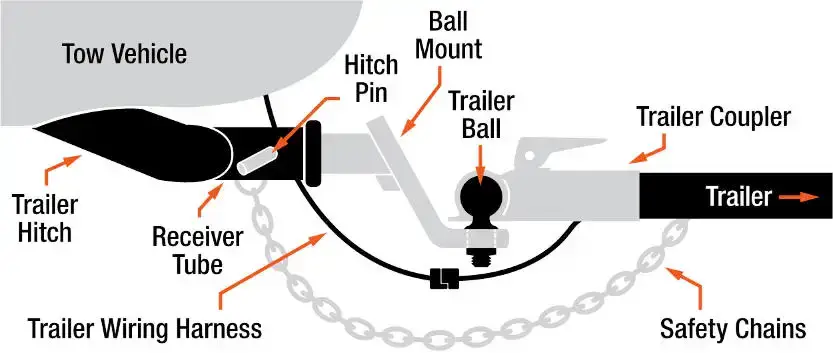
A complete towing setup extends beyond just the hitch receiver. Several critical components work together to create a safe, functional system capable of handling our region’s demands.
Hitch Balls and Mounts
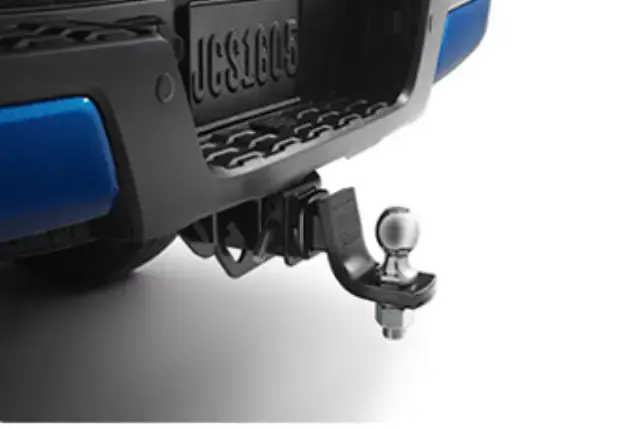
Hitch balls come in three common sizes: 1-7/8″, 2″, and 2-5/16 inches. The ball size must exactly match your trailer coupler—even a 1/8-inch difference creates a dangerous mismatch. Most trailers in the utility and cargo categories use 2-inch balls, while larger dump trailers often require 2-5/16-inch balls.
For Northern Ontario use, choose chrome-plated or stainless steel balls that resist corrosion from road salt. The constant freeze-thaw cycles and aggressive winter road treatments accelerate rust on cheaper plated balls. Invest in quality here—a corroded ball can fail catastrophically.
Ball mounts come in various drop or rise configurations to level your trailer. Proper leveling is crucial for safe towing, especially on Northern Ontario’s hilly terrain. A adjustable ball mount provides flexibility if you tow multiple trailers with different coupler heights.
Safety Chains and Cables
Ontario law requires safety chains on all trailers. These chains provide backup security if the coupler fails or detaches from the ball. For Northern Ontario conditions, use Grade 70 or higher chains with a working load limit exceeding your trailer’s gross weight.
Cross your safety chains under the trailer tongue in an X-pattern. This creates a cradle that catches the tongue if detachment occurs, preventing it from digging into the pavement. Leave enough slack for turning but not so much that chains drag on the ground.
In extreme cold, chains become brittle. Inspect chains regularly for cracks or deformation, especially after winter storage. Replace any chains showing wear—they’re your last line of defense on remote highways where help may be hours away.
Wiring and Electrical Connections
Proper lighting connections are legally required and critically important for winter driving when Northern Ontario sees only a few hours of daylight. Standard trailer wiring uses either 4-pin connectors for basic lighting or 7-pin connectors that add electric brakes and auxiliary power.
Corrosion plagues electrical connections in our salt-heavy environment. Use dielectric grease on all connections and check trailer lights before every trip. Consider installing a weatherproof cover for your vehicle’s connector when not in use.
For drivers frequently switching between trailers, a 4-to-7 pin adapter provides flexibility. However, hardwired connections are more reliable than adapters, which create additional failure points where moisture and corrosion accumulate.
Trailer Brakes and Brake Controllers
Any trailer over 3,000 pounds should have brakes, and many Northern Ontario municipalities require trailer brakes at lower weights. Electric trailer brakes are standard, requiring a brake controller installed in your towing vehicle.
Modern electronic brake controllers use accelerometer technology to sense vehicle deceleration and apply trailer brakes proportionally. This smooth, automatic operation provides better control than older time-delayed controllers, especially important on icy Northern Ontario roads where premature trailer brake engagement can cause jackknifing.
Some newer vehicles come with integrated trailer brake controllers, but aftermarket controllers are easily installed. For winter towing, adjustable gain settings let you reduce brake sensitivity on slippery surfaces, preventing trailer wheel lockup.
Installation Considerations for Northern Climates
Installing a trailer hitch in Northern Ontario requires additional considerations beyond southern installations. Our climate affects both the installation process and long-term durability.
Professional vs. DIY Installation
While mechanically inclined individuals can install receiver hitches, professional installation ensures proper torque specifications and correct mounting. Northern Ontario’s road salt aggressively attacks hardware, and improperly installed hitches can corrode at mounting points, creating dangerous weaknesses.
Professional installers understand vehicle-specific requirements, including which frame sections handle loading and where reinforcement may be necessary. They also properly seal mounting points against moisture intrusion, extending hitch life in our corrosive environment.
If you choose DIY installation, use anti-seize compound on all bolts and apply rust-preventive coating to exposed surfaces. Follow manufacturer torque specifications precisely—undertorqued bolts loosen under load, while overtorqued bolts can strip threads or crack mounting points.
Winterization and Corrosion Prevention
Road salt, combined with freeze-thaw cycles, makes Northern Ontario one of the harshest environments for automotive equipment. Your trailer hitch requires proactive protection to maintain reliability.
After installation, apply a rubberized undercoating or corrosion-preventive spray to the hitch receiver and all mounting hardware. Reapply annually, particularly before winter. Some Northern Ontario drivers apply old motor oil to hitch receivers, creating a protective barrier against salt, though purpose-made corrosion inhibitors work better without the mess.
Keep the receiver tube clean and dry when not in use. Insert a receiver plug to prevent debris and water accumulation inside the tube. Ice buildup inside receivers is common in winter—water enters, freezes, and expands, making ball mount insertion difficult or impossible. A plug prevents this frustration.
Wiring Protection
Trailer wiring faces constant abuse from road debris, salt spray, and temperature extremes. Route wiring harnesses carefully, securing them away from hot exhaust components and sharp frame edges. Use zip ties specifically rated for automotive use—they resist UV damage and temperature extremes better than standard ties.
Consider running wiring through flexible conduit or split loom tubing for additional protection. This simple step dramatically extends wiring life in Northern Ontario conditions. Seal all wire splices with heat-shrink tubing and dielectric grease, creating moisture-resistant connections.
Matching Your Vehicle to Your Trailer
Every vehicle has maximum towing and tongue weight capacities listed in the owner’s manual. Never exceed these limits, regardless of hitch class. Your vehicle’s cooling system, transmission, braking capacity, and frame strength all factor into these ratings.
Understanding Towing Capacity vs. Payload
Towing capacity and payload capacity are separate calculations. When you load cargo into a cargo trailer or dump trailer, the trailer’s tongue weight counts against your vehicle’s payload capacity, not just the towing capacity.
For example, if your truck can tow 7,500 pounds but has only 1,500 pounds payload capacity, and you’re towing a trailer with 750 pounds tongue weight, you can only add 750 pounds of cargo and passengers inside your vehicle before exceeding payload limits. Many Northern Ontario drivers overlook this calculation and overload their vehicles, creating dangerous conditions.
Weight Distribution Hitches
When towing near your vehicle’s capacity, weight distribution hitches improve safety and handling. These systems use spring bars to distribute tongue weight across the towing vehicle’s axles and even transfer some weight to the trailer’s axles.
Weight distribution hitches are particularly valuable for Northern Ontario’s Highway 11 and Highway 17 corridors, where long distances at highway speeds amplify any stability issues. They reduce rear-end sag, improve steering response, and help maintain headlight aim when towing heavy utility trailers or loaded cargo trailers.
However, weight distribution hitches add complexity. They require careful setup and adjustment, and they’re unnecessary for lighter loads well below your vehicle’s capacity. Consider them essential equipment for regular heavy towing, optional for occasional light duty.
Seasonal Maintenance for Northern Ontario Conditions
Your towing equipment needs different care across our dramatic seasonal changes. Proactive maintenance prevents roadside failures far from help.
Winter Preparation
Before winter arrives, inspect all towing components thoroughly. Check hitch mounting bolts for tightness—summer’s vibration and thermal cycling can loosen hardware. Examine safety chains for rust or damage, replacing questionable links before they face winter’s stress.
Apply a heavy coating of anti-corrosion spray to the hitch receiver, ball mount, and all exposed hardware. Some drivers use a lithium-based grease on hitch balls, which prevents freezing to the coupler while protecting against corrosion. Clean off old grease first—dirt and debris mixed with grease create an abrasive compound that accelerates wear.
Test trailer lights in cold temperatures before your first winter tow. Bulbs can fail when cold, and wiring that works at 20°C may crack at -30°C. LED lights resist cold better than incandescent bulbs and draw less power, making them ideal for Northern Ontario use.
Spring Inspection
Spring reveals winter’s damage. Inspect your hitch and ball mount carefully for new rust, cracks, or deformation. Salt accumulation is heaviest in spring as roads dry. Wash your hitch thoroughly, removing all salt residue before it causes permanent damage.
Check ball mount pins and clips—these small components are easily lost during winter and often forgotten until you need to tow. Replace any rusty pins with stainless steel versions that resist corrosion better.
Spring is ideal for reapplying protective coatings removed by winter’s abuse. Clean, treat, and protect your equipment before the busy cottage season begins.
Summer and Fall Maintenance
Summer’s dust coats everything on gravel roads common throughout Northern Ontario. Dust combines with moisture to create an abrasive paste in hitch receivers and around moving parts. Clean and lubricate regularly if you frequently travel gravel roads.
Fall preparation mirrors spring maintenance. Clean, inspect, and protect equipment before winter returns. Pay particular attention to electrical connections, which suffer most from seasonal changes.
Emergency Equipment and Preparedness
Northern Ontario’s remote geography demands self-sufficiency. When towing, carry emergency equipment specific to trailer operation.
Essential Emergency Kit
Every Northern Ontario tower should carry:
- Spare trailer wheel and tire matching your trailer size
- Wheel chocks rated for your trailer weight
- Lug wrench fitting trailer wheel lugs
- Trailer jack or bottle jack with sufficient capacity
- Spare trailer lights and fuses
- Basic hand tools (wrenches, pliers, screwdrivers)
- Spare safety chain or heavy-duty ratchet straps
- Flashlight or headlamp with extra batteries
- Reflective triangles or flares
- Extra hitch pins and clips
Winter-Specific Additions
Winter towing requires additional items:
- Shovel for digging out stuck trailers
- Sand or kitty litter for traction
- Extra cold-weather clothing and blankets
- Emergency candle and waterproof matches
- Charged cell phone or satellite communicator
- Tow strap rated for recovery operations
Remote Highway 11 and Highway 17 sections can go 100 kilometers between services. Being prepared isn’t paranoia—it’s prudent Northern Ontario living.
Selecting the Right Trailer for Your Needs
Matching your trailer to your actual needs prevents overspending while ensuring adequate capacity. Northern Ontario’s diverse activities require different trailer types.
Cargo Trailers for All-Season Use
Enclosed cargo trailers protect contents from weather and theft, crucial for tools and equipment left at remote job sites. The enclosed design also reduces aerodynamic drag compared to open trailers with tall loads, improving fuel economy on long highway runs.
For construction crews, trades workers, and seasonal cabin owners, cargo trailers provide secure, weather-tight transport. Choose insulated models if transporting temperature-sensitive materials in our extreme climate.
Dump Trailers for Heavy Materials
Dump trailers excel at moving gravel, soil, firewood, and construction debris. The hydraulic dump mechanism saves hours of manual unloading labor—important when working alone at remote properties common in Northern Ontario.
Consider dump trailer capacity carefully. Larger capacity means fewer trips but increases weight. Ensure your towing vehicle can handle a fully loaded dump trailer before purchasing maximum capacity.
Utility Trailers for Versatility
Open utility trailers offer maximum versatility. They haul ATVs, boats, lumber, furniture, and countless other loads. The open design accommodates oversized or oddly shaped cargo that won’t fit in enclosed trailers.
For Northern Ontario residents who need to haul diverse loads throughout the year, utility trailers provide the best value. Choose models with removable sides for even greater flexibility.
Legal Requirements and Regulations in Ontario
Ontario has specific towing regulations affecting Northern Ontario drivers. Understanding these laws prevents tickets and ensures safe operation.
Licensing Requirements
Standard Ontario driver’s licenses permit towing trailers up to 4,600 kg (10,141 pounds) provided the combined weight of vehicle and trailer doesn’t exceed 11,000 kg. Most personal-use trailers fall within these limits.
Commercial operations or heavier combinations may require upgraded licensing. Check with the Ministry of Transportation if you’re uncertain about your specific situation.
Insurance Considerations
While Ontario law doesn’t require separate trailer insurance for private use, your auto insurance may not automatically cover trailer contents or trailer damage. Contact your insurance provider to understand coverage and consider additional protection, especially for expensive cargo or utility trailers.
Registration and Plates
Trailers over 1,000 pounds must be registered and display plates. Keep registration documents with your trailer—Northern Ontario’s remote OPP detachments strictly enforce registration requirements on major highways.
Conclusion: Investing in Reliability for Northern Ontario Living
Proper trailer hitches and towing equipment aren’t luxuries in Northern Ontario—they’re essential tools for accessing our region’s opportunities. Whether you’re hauling equipment in a cargo trailer to a remote job site, moving materials with a dump trailer for seasonal projects, or transporting recreational equipment in a utility trailer to access the wilderness, the right setup makes all the difference.
Our extreme climate, remote geography, and diverse terrain demand equipment that performs reliably in conditions that would defeat lesser gear. Invest in quality hitches, maintain them proactively, and match your towing setup to your actual needs. The peace of mind that comes from proper equipment pays dividends every time you hitch up for another Northern Ontario adventure.
With the right trailer and towing setup, Northern Ontario’s vast distances transform from obstacles into gateways to opportunity, recreation, and the independent lifestyle that defines our region.